




Forsche Technologies

The Future of Technology: How AI, Robotics, Machine Learning, Generative AI, Data Science & ROS Are Transforming Industries 

Introduction: The Next Generation of Technology Is Already Here 

Imagine a world where robots assist doctors during surgery, intelligent machines automate manufacturing, AI systems create content within seconds, and businesses predict future trends using data. 

This is no longer just science fiction. Technologies such as Artificial Intelligence (AI), Robotics, Machine Learning (ML), Generative AI (Gen AI), Data Science, and Robot Operating System (ROS) are transforming how industries operate, innovate, and solve real-world challenges. 

From healthcare and education to manufacturing, agriculture, transportation, and business automation, these technologies are creating new possibilities for organizations and professionals. 

For students and aspiring engineers, understanding these emerging technologies is becoming increasingly valuable. 

Let’s explore how each technology works, its real-world applications, and how they connect to shape the future. 

1. Artificial Intelligence (AI): Making Machines Smarter

Artificial Intelligence is a branch of computer science focused on developing systems capable of performing tasks that typically require human intelligence.

AI enables machines to recognize patterns, understand language, interpret images, make predictions, and support decision-making.

Real-World Applications of AI

  • Healthcare: AI-assisted medical imaging, disease detection, and clinical decision support.
  • Education: Personalized learning platforms, intelligent tutoring systems, and automated assessments.
  • Manufacturing: Quality inspection, predictive maintenance, and intelligent automation.
  • Agriculture: Crop monitoring, disease detection, and precision farming.
  • Transportation: Driver-assistance systems, traffic optimization, and autonomous navigation research.

Why Should Students Learn AI?

AI provides opportunities to work on intelligent applications that solve practical problems.

Students can begin with Python programming, mathematical foundations, AI concepts, and basic model development before progressing to computer vision, natural language processing, and intelligent automation.

The future belongs to people who understand how to develop, evaluate, and responsibly apply intelligent technologies.

2. Robotics: Bringing Intelligence into the Physical World

Robotics combines mechanical engineering, electronics, computer science, sensors, and control systems to develop machines capable of performing physical tasks. 

Modern robotics increasingly incorporates AI and machine learning to help robots perceive their surroundings, navigate environments, and interact with people. 

Types of Robots 

  • Industrial Robots: Used in manufacturing, assembly, welding, and material handling. 
  • Humanoid Robots: Designed with human-like physical features and movement capabilities. 
  • Autonomous Mobile Robots (AMRs): Navigate environments for transportation, inspection, and logistics. 
  • Educational Robots: Help students understand programming, electronics, automation, and intelligent systems. 
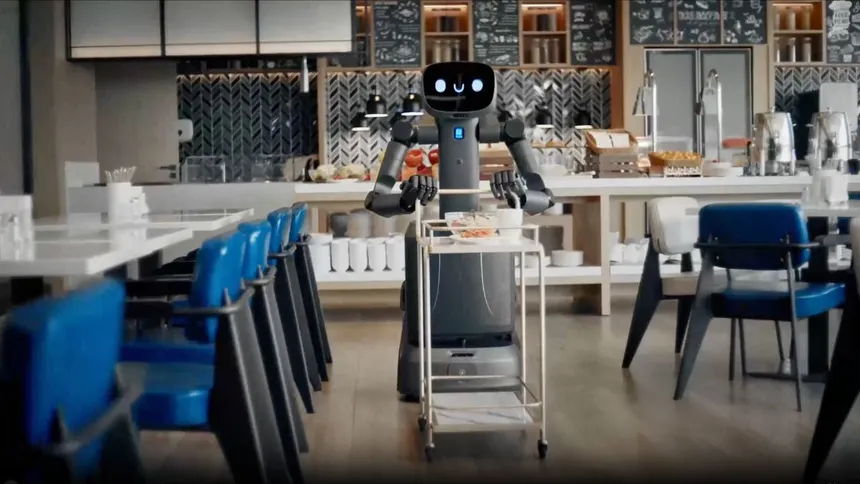
  • Service Robots: Assist with tasks in healthcare, hospitality, and other service environments. 

How AI and Robotics Work Together 

Consider an autonomous robot navigating a college campus. 

The robot may use cameras and sensors to detect obstacles, AI-based perception to recognize objects, navigation algorithms to plan a route, and motor controllers to move safely. 

By combining these technologies, robots can perform increasingly complex tasks in dynamic environments. 

For engineering students, robotics offers a practical opportunity to apply programming, electronics, mathematics, and AI concepts in a single project. 

3. Machine Learning (ML): Teaching Computers to Learn from Data

Machine Learning is a subset of Artificial Intelligence that enables computers to identify patterns in data and make predictions without requiring explicit instructions for every possible situation. 

Instead of programming every decision manually, developers train machine learning models using relevant datasets. 

Major Types of Machine Learning 

Supervised Learning 

Models learn from labelled examples to predict outcomes. 

Example: Predicting house prices based on location, area, and other property characteristics. 

Unsupervised Learning 

Models discover patterns or groups within datasets without predefined labels. 

Example: Grouping customers based on purchasing behaviour. 

Reinforcement Learning 

An agent learns through interactions with an environment and feedback in the form of rewards or penalties. 

Example: Training a simulated robot to navigate a complex environment. 

Applications of Machine Learning 

  • Fraud detection in banking. 
  • Product recommendation systems. 
  • Customer behaviour analysis. 
  • Predictive maintenance. 
  • Image classification. 
  • Demand forecasting. 

Career Opportunities 

Students developing machine learning skills can explore career paths such as Machine Learning Engineer, AI Developer, Data Scientist, and Applied AI Engineer. 

A strong foundation in Python, statistics, data preprocessing, model evaluation, and practical projects is essential for entering this field. 


4. Generative AI (Gen AI): From Understanding Information to Creating Content

Generative AI is one of the most exciting developments in modern artificial intelligence. 

Unlike systems designed primarily to classify information or predict numerical outcomes, Generative AI can create new content based on learned patterns and user instructions. 

It can generate text, images, software code, audio, video, and other forms of digital content. 

Popular Applications of Generative AI 

  • AI Chatbots: Assist users with questions, information retrieval, and customer support. 
  • Content Generation: Help create articles, marketing materials, and educational resources. 
  • Software Development: Assist developers with code generation, documentation, and debugging. 
  • Education: Generate explanations, practice exercises, and personalized learning materials. 
  • Business Automation: Support document processing, reporting, and workflow automation. 

What Are Large Language Models (LLMs)? 

Large Language Models are AI models trained on extensive amounts of data to process and generate language. 

They power many conversational AI systems and can assist with summarization, translation, question answering, and programming tasks. 

However, AI-generated outputs can sometimes be inaccurate or misleading. Human verification, privacy protection, and responsible usage remain essential. 

Why Learn Generative AI? 

Generative AI creates opportunities for students to develop AI-powered applications, intelligent assistants, knowledge retrieval systems, and business automation solutions. 

Important learning areas include prompt engineering, Python, LLM APIs, Retrieval-Augmented Generation (RAG), model evaluation, and AI application development. 

5. Data Science: Turning Raw Data into Valuable Insights

Every digital interaction generates data. 

Businesses collect information from websites, mobile applications, customer interactions, transactions, and connected devices. 

But raw data becomes valuable only when it is properly collected, processed, analyzed, and interpreted. 

This is where Data Science plays an important role. 

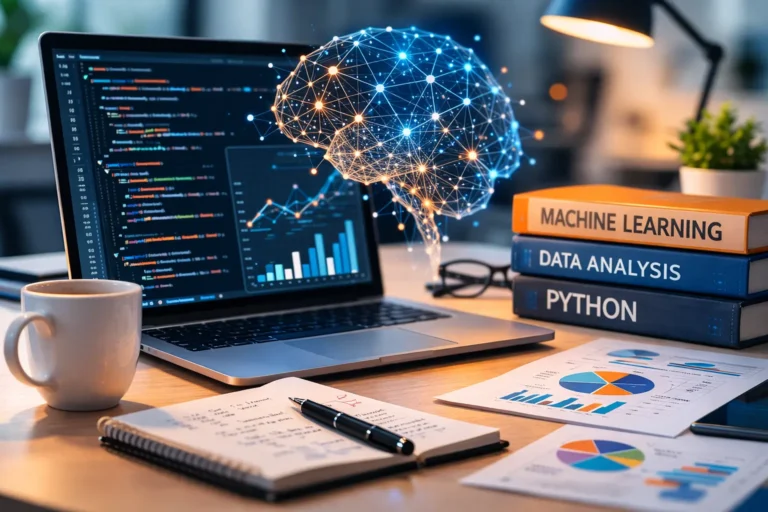
Data Science combines statistics, programming, data analysis, and domain knowledge to discover useful insights and support decision-making. 

Key Stages of Data Science 

  1. Data Collection: Gathering information from relevant sources. 
  1. Data Cleaning: Identifying and correcting missing, inaccurate, or inconsistent data. 
  1. Data Analysis: Exploring patterns, relationships, and trends. 
  1. Data Visualization: Presenting insights using charts, dashboards, and reports. 
  1. Predictive Modelling: Applying statistical or machine learning techniques to forecast outcomes. 
  1. Decision Support: Using findings to improve business or operational strategies. 

Real-World Applications 

  • Predicting customer demand. 
  • Analyzing student learning performance. 
  • Monitoring business revenue. 
  • Detecting unusual financial transactions. 
  • Forecasting equipment failures. 
  • Optimizing logistics and supply chains. 

Essential Skills for Data Science 

Students interested in Data Science should focus on Python, SQL, statistics, Pandas, NumPy, data visualization, and machine learning fundamentals. 

Data Science is particularly valuable because it connects technical analysis with real-world business problems.

raw-data-meaningful-insights

6. Robot Operating System (ROS): The Foundation for Modern Robot Software

Robot Operating System, commonly known as ROS, is an open-source software framework and ecosystem used to develop robotic applications. 

Despite its name, ROS is not a traditional operating system like Windows or Linux. It provides software libraries, tools, communication mechanisms, and reusable components that simplify robot development. 

ROS 2 is particularly relevant for modern robotics projects that require modular software architecture and communication between robotic components. 

What Can Developers Build Using ROS? 

  • Autonomous mobile robots. 
  • Robotic arms and manipulators. 
  • Robot navigation systems. 
  • Sensor integration applications. 
  • Computer vision-enabled robots. 
  • Simulation-based robotics projects. 

Important ROS 2 Concepts 

Nodes: Individual software components responsible for specific functions, such as reading sensor data or controlling motors. 

Topics: Communication channels used to exchange continuous data between nodes. 

Services: Request-response communication for tasks that need relatively quick results. 

Actions: Communication mechanisms for longer-running tasks that provide feedback and may support cancellation. 

Simulation: Robotics tools can be integrated with ROS to test robot behaviour in virtual environments before deploying it on physical hardware. 

Why Is ROS Important for Robotics Students? 

ROS allows students to move beyond basic robotics kits and understand how larger robotic software systems are designed. 

Learning ROS 2, Python or C++, Linux, sensor integration, and robot navigation can help students build a strong foundation for advanced robotics development. 

7. How AI, ML, Gen AI, Data Science, Robotics & ROS Work Together

Although these technologies are often studied separately, their real potential becomes clearer when they are integrated. 

Consider the development of an intelligent autonomous robot. 

Technology 

Role in the System 

Artificial Intelligence 

Enables intelligent perception and decision-making 

Machine Learning 

Helps recognize objects and identify patterns 

Generative AI 

Supports natural-language interaction and intelligent assistance 

Data Science 

Analyzes operational and sensor data 

Robotics 

Provides physical movement and interaction 

ROS 2 

Connects and coordinates robotic software components 

For example, a campus assistance robot could use ROS 2 to coordinate sensors and navigation, computer vision to recognize objects, and Generative AI to answer student questions. 

Data analysis could also help administrators understand usage patterns and improve services. 

This demonstrates why interdisciplinary knowledge is becoming increasingly important in modern engineering. 

8. Career Opportunities in Emerging Technologies

As organizations explore intelligent automation and data-driven systems, professionals with relevant technical and practical skills can pursue opportunities across multiple industries. 

Potential career paths include: 

  • Artificial Intelligence Engineer 
  • Machine Learning Engineer 
  • Generative AI Application Developer 
  • Data Scientist 
  • Data Analyst 
  • Robotics Software Engineer 
  • ROS Developer 
  • Computer Vision Engineer 
  • AI Automation Engineer 
  • Robotics Research Engineer 

Career readiness requires more than theoretical knowledge. Employers may evaluate programming skills, project experience, problem-solving ability, teamwork, and the capacity to develop working applications. 

Students who combine strong fundamentals with practical projects can build a more competitive technical portfolio.

9. Why Hands-On Learning Matters More Than Ever

Understanding concepts is important, but applying them to real-world problems is what develops engineering confidence. 

A student may understand machine learning algorithms theoretically but still need practical experience in preparing datasets, training models, and evaluating results. 

Similarly, robotics students benefit from working with sensors, motors, controllers, simulation tools, and actual robotic systems. 

An effective learning approach combines: 

  • Strong technical foundations. 
  • Practical demonstrations. 
  • Guided laboratory exercises. 
  • Industry-oriented projects. 
  • Team-based problem-solving. 
  • Continuous experimentation and improvement. 

For educational institutions, integrating emerging technologies into academic learning can help bridge the gap between classroom knowledge and practical engineering applications. 

 10. Forsche.ai: Empowering the Next Generation of Technology Innovators

At Forsche.ai, our focus is on connecting technology education with practical learning experiences. 

We aim to help students, graduates, professionals, and educational institutions explore emerging technologies through industry-oriented learning initiatives. 

Our focus areas include: 

AI & Robotics Education 

Introducing learners to intelligent robotic systems, automation, sensors, and practical robotics applications. 

Machine Learning & Data Science 

Helping learners understand data-driven problem-solving, predictive modelling, and analytical thinking. 

Generative AI 

Exploring AI-powered applications, intelligent assistants, and modern generative technologies. 

ROS & Advanced Robotics 

Building awareness of robotic software development, simulation, navigation, and integration. 

Institutional Collaboration 

Supporting schools and colleges through technology-focused workshops, faculty development programs, value-added courses, internships, industrial visits, and AI & Robotics lab initiatives. 

Our goal is to encourage students to move beyond simply learning technology and begin applying it to meaningful real-world challenges.

 Conclusion: The Future Belongs to Technology Creators

Artificial Intelligence, Machine Learning, Generative AI, Data Science, Robotics, and ROS are not isolated technologies. Together, they form an increasingly important foundation for intelligent systems and modern automation. 

For students, this creates an opportunity to explore new technical disciplines and build valuable skills. 

For educational institutions, it highlights the importance of practical, industry-relevant learning. 

For businesses, it opens possibilities for innovation, efficiency, and smarter decision-making. 

The next generation of engineers will not only use intelligent technology. They will help design, develop, test, and improve it. 

Start Exploring the Future with Forsche.ai 

Whether you are a student interested in emerging technologies, a professional looking to develop new skills, or an institution planning to introduce AI and Robotics education, Forsche.ai is committed to supporting technology-focused learning and innovation. 

Explore AI. Build Intelligent Systems. Create the Future. 

Visit: https://forsche.ai 

Forsche.ai – Empowering Future Innovators Through AI, Robotics & Emerging Technologies.